
Zygomatic Implants: What They Are and When They Are Recommended
When there is significant bone loss in the upper jaw, many people believe that “implants are no longer possible.” However, there are advanced alternatives that make it possible to restore complex cases without relying on conventional jawbone. One of them is zygomatic implants. At AKDENT – Dental Clinic, we explain what they are, when they are recommended, and why they require a highly specialized assessment.
What are zygomatic implants?
Zygomatic implants are longer implants that are anchored in the zygomatic bone (cheekbone), rather than relying solely on the bone of the upper jaw. They are mainly used to restore patients with severe maxillary atrophy (very little bone) in the upper jaw.
In simple terms: the goal is to find a solid “anchor” in a denser, more stable bone so that a fixed prosthesis can be placed.
When are they recommended?
Zygomatic implants are considered when conventional implants are not feasible in the upper jaw due to a lack of bone or previous surgeries. Some typical situations include:
- Severe maxillary atrophy (very little bone in the upper jaw).
- Patients with no upper teeth (edentulous) who have an unstable denture.
- Failure of previous implants in the upper jaw.
- Cases where a bone graft would be complex or is not desired by the patient.
- The need for a fixed restoration in complex cases.
What advantages can they offer?
In well-selected patients, zygomatic implants can offer an effective alternative for getting a fixed prosthesis back when there is not enough bone for traditional implants.
- An alternative to bone grafting in some cases.
- Anchorage in dense bone (the zygoma), with good stability.
- The possibility of a fixed restoration in complex cases.
- In certain protocols, they can be combined with immediate loading (depending on planning).
Are they suitable for everyone?
No. Zygomatic implants are an advanced solution, but they require strict indication criteria and a detailed study. They are not chosen “by preference,” but because the case calls for them.
In addition, because this is a complex anatomical area, planning and the experience of the team are essential.
How is a zygomatic implant case planned?
Planning is the key to success. Before recommending this treatment, a complete evaluation of the patient is carried out, usually including:
- Clinical examination and assessment of the gums and mucosa.
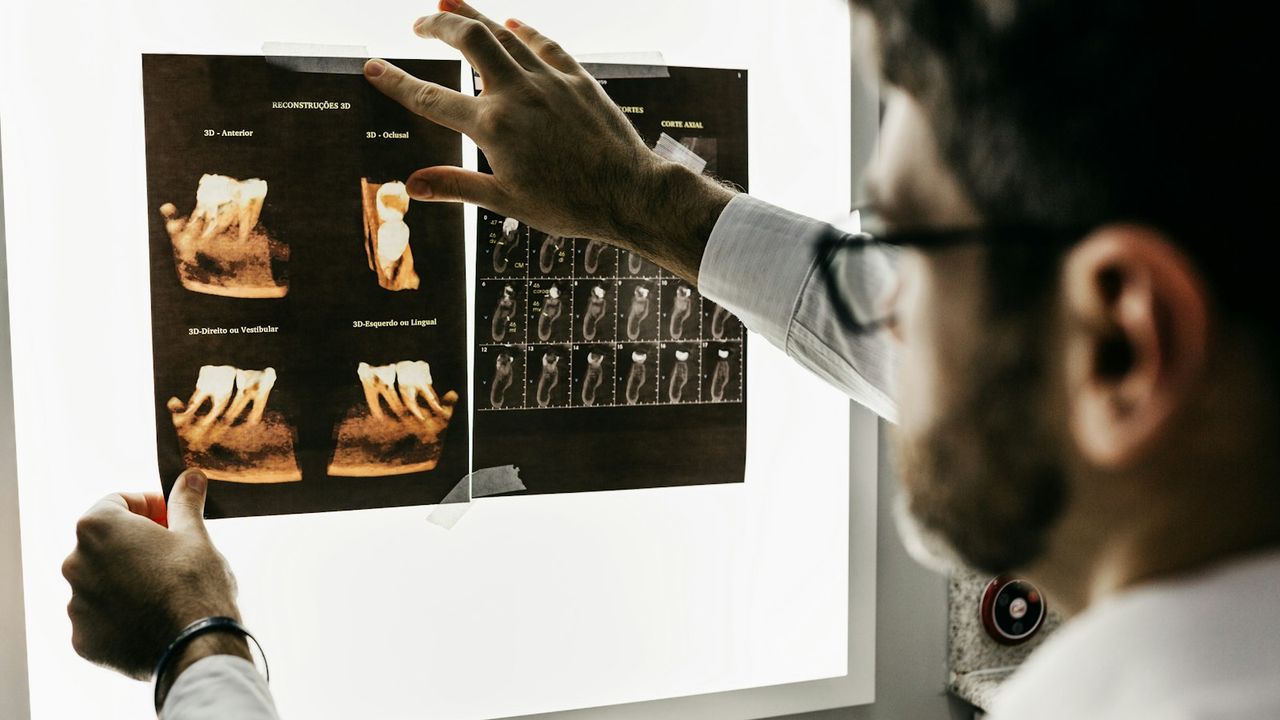
- X-ray/3D imaging to assess the bone and anatomy (maxillary sinuses, zygoma).
- Bite analysis and prosthetic needs.
- Prosthetic plan: type of fixed restoration and treatment phases.
What aftercare is required?
As with any implant treatment, maintenance is essential. In complex cases, hygiene and follow-up checks become even more important.
- Daily oral hygiene using the recommended techniques and products.
- Regular check-ups to monitor the gums and the stability of the prosthesis.
- Avoiding habits that overload the bite (especially if you have bruxism).
- Professional cleanings as scheduled.
Frequently asked questions
Are they painful?
Discomfort can usually be managed with the prescribed medication. At AKDENT, we explain the postoperative period and our comfort protocol.
Can a fixed prosthesis be placed?
In most cases, the goal is precisely to achieve a fixed restoration, as long as the case allows it.
Is a bone graft always avoided?
Not always. Sometimes techniques are combined, but the approach is decided based on the bone, anatomy and the patient’s goals.
How we assess your case at AKDENT
At AKDENT – Dental Clinic, we evaluate each case individually. If there is little bone in the upper jaw, we study the available options (conventional implants, grafts, advanced techniques) and recommend the safest and most predictable alternative for your situation.
- 3D imaging and a complete diagnosis.
- A prosthetic plan focused on stability and function.
- Follow-up and maintenance for long-lasting results.
Conclusion: an advanced option for complex cases
Zygomatic implants make it possible to restore patients with severe maxillary atrophy when conventional implants are not feasible. They are an advanced solution that requires proper diagnosis, planning and experience. At AKDENT, we analyze your case and guide you toward the safest treatment, tailored to your needs.
If you have been told that you “don’t have enough bone” for implants, book your appointment at AKDENT and we will review your options with you.
Updated: