

Dental Floss, Interdental Brushes and Dental Tape: The Perfect Clean
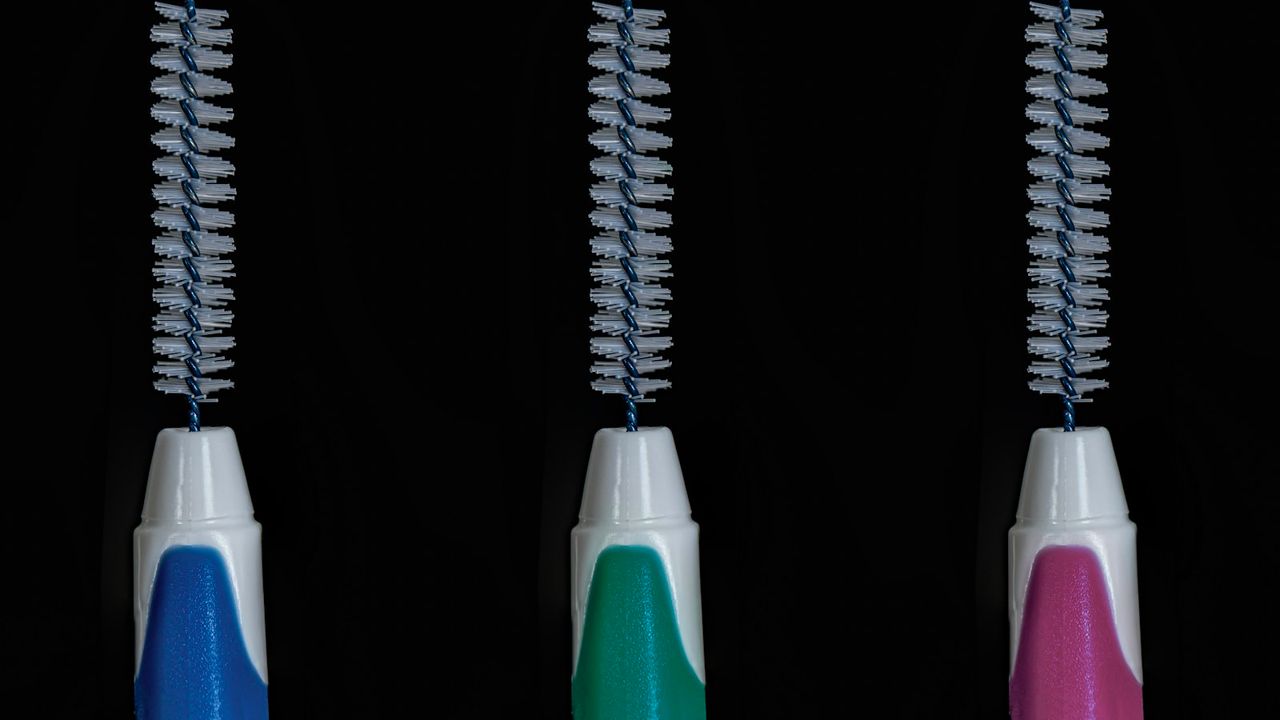
Interdental hygiene is just as important as brushing: 40% of each tooth's surface lies between the teeth, where a toothbrush can't reach. At AKDENT – Dental Clinic, we explain which tool to choose (floss/tape/superfloss or interdental brushes), how to use them without damaging your gums, and when each one is best for your mouth (gums, orthodontics, implants, bridges, sensitivity).
Interdental brush sizes: how to choose
The right size should fit snugly without forcing it or causing pain. If it "dances" around without touching the teeth, it's too small; if it won't go in or bends the wire, it's too big. At AKDENT, we measure with calibrated probes and tell you which colors/sizes to use for each space (sometimes one for the front teeth and another for the back teeth).
Step-by-step technique: floss or tape (safe method)
- Cut 35–40 cm (14–16 in), wrap it around your middle fingers, and hold it taut with your thumb and index finger.
- Gently guide it past the contact point, without "snapping" it into the papilla.
- Shape it into a "C" around the tooth; slide it from the gum to the biting edge and back 3–5 times.
- Move to a clean section for the neighboring tooth; repeat on both sides of the space.
- In very tight spots, use dental tape or waxed floss to help it glide more easily.
Step-by-step technique: interdental brushes
- Choose the recommended size (color) for that area.
- Insert it straight in without twisting; for back teeth, angle it slightly backward.
- Make 2–4 passes in and out, touching both tooth surfaces.
- Rinse the brush and continue. Don't bend it excessively; if it splays open quickly, it's probably too small.
- Replace it when the wire becomes deformed or the bristles are very splayed (it usually lasts several days to a week, depending on use).
Which comes first: flossing or brushing?
Both orders work well. Our practical recommendation: clean between your teeth first (floss/brushes) to clear away plaque and food debris, then brush with fluoride toothpaste so the fluoride reaches your teeth better. At night, this is the key session.
Orthodontics, bridges and implants: adjustments for each case
- Fixed orthodontics (braces): superfloss or floss with a floss threader under the archwire; conical interdental brushes around the brackets and between the wings.
- Bridges: pass the floss under the pontic with a floss threader; superfloss cleans the underside of the pontic and the abutment teeth.
- Implants: interdental brushes with soft filaments (to avoid damaging the peri-implant gum tissue). There are also special spongy floss products designed for implants.
- Receding gums: prioritize interdental brushes in the correct size; floss can "cut" the papilla if used with too much force.
Water flosser: does it work?
A water flosser helps flush out debris and reduce inflammation in hard-to-reach areas (orthodontics, implants, periodontal pockets). It is a supplement, not a replacement for floss/brushes. Use it at the end of your routine with water (or as directed).
Common mistakes (and how to avoid them)
- "Sawing" the papilla with the floss → Insert it gently, form a C, and slide it right along the tooth.
- Using only one interdental brush size for the whole mouth → Adapt it by area (you may need 2 sizes).
- Lack of order → Always follow the same route (quadrant by quadrant) so you don't skip any spaces.
- Just one pass → Do several (2–4 with interdental brushes; 3–5 with floss).
- Forcing a brush that's too big → Switch to a smaller size, or use tape/floss if the contact is tight.
Sensitivity and bleeding: what's normal and what's not
If you're just starting interdental cleaning, slight bleeding for 7–10 days is common because of inflamed gums. With correct use, it should decrease. If the bleeding persists or you feel pain, review your technique and ask for an evaluation (you may have gingivitis or subgingival calculus).
Recommended nighttime routine – 5 steps
- 1) Interdental cleaning: floss/tape/superfloss or brushes, depending on the area.
- 2) Brush for 2–3 minutes (Bass technique or an electric toothbrush with a pressure sensor).
- 3) Clean your tongue.
- 4) Spit without rinsing, or rinse minimally, to keep the fluoride on your teeth.
- 5) Depending on your risk level: use a fluoride mouthwash at another time of day.
30-second checklist
- Have I chosen the right interdental brush size for each area?
- Am I making the "C" shape with the floss without cutting the papilla?
- Do I always follow the same order (not skipping spaces)?
- Am I doing 2–4 passes with interdental brushes and 3–5 with floss?
- Do I finish with brushing and fluoride (without a strong rinse)?
Frequently asked questions (FAQ)
- Floss or interdental brushes: which is "better"? It depends on the space: narrow → floss/tape; open or with recession/implants → interdental brushes.
- How often? Daily, preferably at night.
- Does a water flosser replace them? No; it's a supplement. Use it after floss/interdental brushes.
- Can I hurt my gums? Yes, if you saw with the floss or force the wrong size. A gentle technique and the right sizes prevent damage.
- What if I have a fixed retainer? Floss threader + superfloss behind the wire.
Your plan at AKDENT: precision and consistency
At AKDENT – Dental Clinic, we measure your spaces, choose the ideal sizes and tools, and practice the technique with a mirror until it feels natural. After a few weeks of consistency, you'll notice firmer gums, less bleeding and fresher breath.
Would you like your personalized interdental map? Book your hygiene appointment and take home your guide to colors/sizes by area, plus a simple routine that works.
Updated: